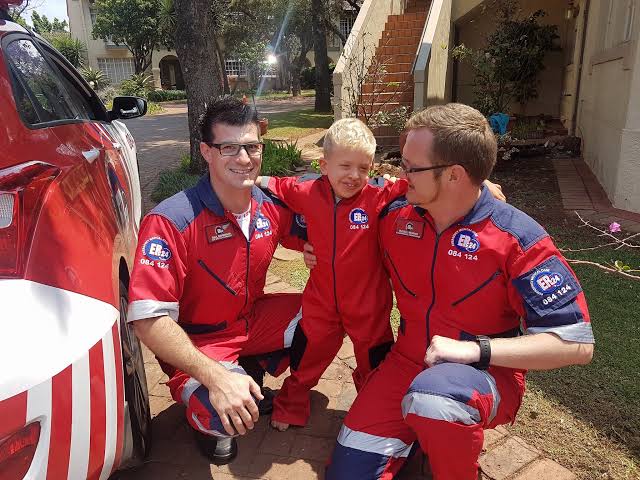
Apply For Paramedics Learnership Program in South Africa and explore emergency medical care training, entry requirements, qualifications, application guidance and career opportunities in the healthcare sector.
Introduction
Are you interested in working in the healthcare sector and helping people during medical emergencies? The Apply For Paramedics Learnership Program opportunity is worth exploring if you want to develop skills in emergency medical care and build a career that makes a difference in people’s lives.
Paramedics and emergency medical care professionals play an important role in South Africa’s healthcare system. They respond to accidents, medical emergencies and other situations where people need urgent medical assistance. Their work helps patients receive care before reaching hospitals and other healthcare facilities.
For young South Africans who are interested in healthcare, emergency medical services can offer an exciting career path. However, becoming a qualified paramedic requires proper education, practical training and professional registration.
There is also an important difference between a paramedic learnership, an emergency medical care qualification and an employment opportunity. Applicants should understand these differences before submitting applications.
This article explains how to explore paramedic training opportunities, what qualifications may be required, where to find legitimate programmes and how to prepare for an application.
Important notice: This is a general career and training guide, not confirmation of a currently open government or private-sector learnership. No specific employer, stipend, closing date or intake number has been supplied.
1. What Is the Paramedics Learnership Program?
A paramedic learnership is commonly used to describe a training opportunity that combines learning with practical experience in emergency medical care.
The main purpose of emergency medical care training is to prepare learners to understand how emergency medical services operate and how qualified professionals provide care to patients.
Depending on the institution and qualification, training can include classroom lessons, practical activities, supervised clinical experience and assessments.
Learners may study subjects related to:
-
Basic human anatomy.
-
Human body functions.
-
Emergency medical care.
-
Patient assessment.
-
Communication in healthcare.
-
Professional conduct.
-
Medical ethics.
-
Emergency response procedures.
-
Patient safety.
-
Clinical practice.
It is important to understand that not every advertised training programme leads directly to employment as a registered paramedic.
In South Africa, emergency care professionals must complete the appropriate recognised qualification and meet the registration requirements of the Health Professions Council of South Africa (HPCSA).
Therefore, applicants should check the qualification offered by a training provider before accepting an opportunity.
Why Consider Emergency Medical Care Training?
Emergency medical care can be a suitable career direction for people who enjoy helping others and working in healthcare environments.
The profession requires individuals who can communicate clearly, remain professional and work responsibly as part of a medical team.
It can also provide opportunities to continue studying and develop additional professional skills.
2. Understanding How Paramedic Training Works in South Africa
South Africa has formal education and professional registration requirements for emergency medical care.
The training system includes different qualification levels. Each qualification has its own admission requirements, learning outcomes and professional registration pathway.
For example, the Higher Certificate in Emergency Medical Care is an entry-level qualification designed to prepare qualifying learners for registration as Emergency Care Assistants.
Further study can provide opportunities to progress into higher emergency medical care qualifications.
The following table provides a general overview.
| Qualification | General purpose |
|---|---|
| Higher Certificate in Emergency Medical Care | Entry-level emergency care education |
| Diploma in Emergency Medical Care | Mid-level professional emergency care education |
| Bachelor of Emergency Medical Care | Professional-level emergency care education |
The duration and admission requirements depend on the institution and the qualification.
According to SAQA, the Higher Certificate in Emergency Medical Care is an NQF Level 5 qualification consisting of 120 credits and designed to be completed over one year.
You can read more about the qualification through the SAQA qualification information.
Is a Learnership the Same as a Paramedic Qualification?
No.
A learnership is a structured learning arrangement, while a professional qualification is an educational award that meets specific requirements.
A short training certificate does not automatically make someone a qualified paramedic.
Applicants should confirm whether the training provider and qualification are recognised for the intended professional registration.
The HPCSA provides information about approved professional training and registration requirements.
3. Why Emergency Medical Services Are Important
Emergency medical services are an important part of South Africa’s healthcare system.
People can experience medical emergencies at home, at work, on public roads and in other locations. During these situations, emergency medical teams help provide timely medical assistance.
Their responsibilities may include responding to emergency calls, assessing patients and transporting people who require further treatment.
Emergency care professionals also work with other healthcare workers, including nurses, doctors and hospital staff.
Supporting Communities
Emergency medical services support communities by helping people access medical assistance during urgent situations.
Their work is especially important when patients need medical attention before they reach a hospital.
Creating Healthcare Career Opportunities
The emergency medical care sector offers different career pathways.
People who complete recognised qualifications may explore opportunities within:
-
Public healthcare services.
-
Private ambulance companies.
-
Emergency medical organisations.
-
Healthcare training institutions.
-
Specialised emergency response services.
However, employment depends on qualifications, professional registration, available vacancies and employer requirements.
4. Duties and Responsibilities of Emergency Medical Care Professionals
People working in emergency medical services have important responsibilities.
Their duties depend on their qualification, professional registration, employer and approved scope of practice.
Some common responsibilities include the following.
4.1 Responding to Emergency Calls
Emergency medical teams respond to requests for assistance from people experiencing medical emergencies.
They must communicate professionally and follow the procedures established by their emergency medical service.
4.2 Assessing Patients
Qualified emergency care professionals assess patients according to their education and approved scope of practice.
They gather relevant information and determine the appropriate next steps.
4.3 Providing Emergency Care
Emergency care professionals provide medical assistance within their training and professional responsibilities.
The type of care they can provide depends on their registration category and level of qualification.
4.4 Transporting Patients
Some emergency medical professionals assist with transporting patients to healthcare facilities.
Patient safety and communication remain important throughout the process.
4.5 Completing Reports
Accurate documentation is another important responsibility.
Emergency medical teams may need to record information about patients, incidents and the care provided.
4.6 Working With Healthcare Teams
Emergency medical services require teamwork.
Professionals communicate with colleagues, hospitals and other emergency response organisations to support patient care.
5. Benefits of Applying for Paramedic Training Opportunities
Exploring the Apply For Paramedics Learnership Program pathway can help interested individuals understand the education and skills needed for a career in emergency medical services.
Here are some potential benefits of pursuing recognised emergency care training.
5.1 Developing Healthcare Knowledge
Training introduces learners to important healthcare subjects.
These may include anatomy, physiology, emergency care theory and patient communication.
5.2 Gaining Practical Experience
Some qualifications include supervised clinical practice.
This allows learners to apply their knowledge in approved learning environments under appropriate supervision.
5.3 Building Professional Skills
Emergency medical care training can help learners develop:
-
Communication skills.
-
Teamwork.
-
Problem-solving.
-
Time management.
-
Professional behaviour.
-
Critical thinking.
-
Responsibility.
5.4 Exploring Different Career Paths
After completing the required qualifications, graduates may explore opportunities in different emergency medical care environments.
5.5 Supporting Communities
Emergency medical care is a service-focused profession.
Qualified professionals contribute to the health and safety of the communities they serve.
6. Minimum Requirements for Paramedic Training
The entry requirements for emergency medical care programmes are not the same across all institutions.
Applicants must read the official admission notice carefully because different qualifications have different academic requirements.
The following are examples of requirements that institutions may consider.
| Requirement | Explanation |
|---|---|
| South African ID | Proof of identity may be required |
| Matric certificate | Relevant school results may be required |
| English | Communication and academic language requirements |
| Mathematics | Required for certain qualifications |
| Life Sciences | May form part of admission requirements |
| Physical Sciences | May be required by some institutions |
| Medical fitness | Some programmes require an assessment |
| Practical readiness | Learners should be prepared for practical training |
6.1 South African Citizenship
Some government-funded opportunities may require applicants to be South African citizens.
However, citizenship requirements depend on the institution and funding arrangement.
6.2 Educational Requirements
Applicants should have the school subjects and admission level required by their chosen qualification.
For example, a Higher Certificate, Diploma and Bachelor’s Degree may have different admission requirements.
6.3 Medical and Physical Fitness
Some emergency medical care programmes require applicants to complete medical or physical fitness assessments.
This is because the profession can involve demanding working environments and practical responsibilities.
6.4 Communication Skills
Clear communication is important when working with patients, colleagues and other healthcare professionals.
Applicants should be willing to improve their communication skills throughout their training.
7. Educational Qualifications Needed to Become a Paramedic
One of the most important things to understand before applying is the difference between entry-level emergency care education and professional paramedic training.
South Africa has formal emergency medical care qualifications.
Higher Certificate in Emergency Medical Care
This qualification provides entry-level education in emergency medical care.
It includes theoretical learning and practical clinical training.
According to SAQA, the qualification is at NQF Level 5 and consists of 120 credits.
Diploma in Emergency Medical Care
The Diploma provides further education in emergency medical care.
It develops knowledge and practical abilities needed for work within the relevant professional category.
Bachelor of Emergency Medical Care
A Bachelor’s Degree provides professional-level education in emergency medical care.
The programme includes academic and practical learning to prepare students for advanced professional responsibilities.
Check Your Qualification Before Applying
Before enrolling, applicants should confirm:
-
Whether the institution is recognised.
-
Whether the qualification is registered and recognised.
-
Whether the programme meets HPCSA requirements.
-
What professional registration the qualification supports.
-
What the admission requirements are.
You can visit the HPCSA Education and Training page for official information.
8. Important Skills Needed for a Career in Emergency Medical Services
Academic qualifications are important, but emergency medical care professionals also need personal and professional skills.
Communication
Emergency medical professionals must communicate clearly with patients and colleagues.
Good communication helps people understand important information.
Teamwork
Emergency medical services depend on cooperation.
Professionals need to work with colleagues and other healthcare workers.
Problem-Solving
Medical emergencies can involve different challenges.
Professionals must use their training and follow approved procedures when responding to situations.
Professionalism
Respect, confidentiality and responsible behaviour are important in healthcare.
Emotional Responsibility
Emergency medical care can involve stressful situations.
People entering this profession should understand the importance of professional support, personal wellbeing and appropriate workplace guidance.
9. What Does Paramedic Training Include?
The training structure depends on the institution and qualification.
However, recognised emergency medical care programmes may include several learning areas.
| Training area | What learners study |
|---|---|
| Anatomy | Structure of the human body |
| Physiology | How the human body functions |
| Emergency care theory | Principles of emergency medical care |
| Communication | Professional interaction |
| Clinical practice | Supervised practical learning |
| Professional ethics | Responsible healthcare conduct |
| Basic sciences | Relevant scientific knowledge |
Classroom Learning
Students attend lessons and complete academic activities.
They learn the scientific principles behind emergency medical care.
Practical Learning
Practical activities allow learners to develop relevant skills under supervision.
Clinical Experience
Depending on the programme, learners may complete clinical placements in approved healthcare environments.
Assessments
Students are assessed to determine whether they have achieved the required learning outcomes.
Successful completion of the qualification is necessary before pursuing the relevant professional registration.
10. Documents Required When Applying
If you find an officially advertised emergency medical care training opportunity, prepare the documents requested by the institution.
Commonly requested documents may include:
-
Updated curriculum vitae.
-
Certified copy of your South African ID, where applicable.
-
Certified copy of your Matric certificate.
-
Academic transcripts, if required.
-
Proof of residence, if requested.
-
Relevant certificates.
-
Completed application form.
-
Additional supporting documents listed in the advertisement.
Applicants should make sure their documents are clear and readable.
Preparing Your CV
Your CV should include your educational background, contact information and relevant experience.
If you have completed volunteer activities, community programmes or relevant training, you may include them where appropriate.
Keep your CV professional and easy to understand.
Checking Your Documents
Before submitting an application, check that:
-
Your contact details are correct.
-
Your educational information is accurate.
-
All requested documents are included.
-
Your application form is complete.
-
Your documents meet the institution’s instructions.
11. Where to Find Paramedics Learnership Opportunities in South Africa
Applicants should use reliable sources when searching for emergency medical care training.
Not every opportunity advertised on social media is genuine.
The following organisations and platforms can help you research recognised training and employment information.
11.1 South African Department of Health
The Department of Health provides information about public healthcare services and relevant provincial health department opportunities.
Visit the National Department of Health website.
11.2 Provincial Departments of Health
Provincial departments may advertise emergency medical services vacancies, training opportunities and other healthcare-related programmes.
Applicants should check the official website of their provincial department.
11.3 Health Professions Council of South Africa
The HPCSA regulates relevant health professions and provides information about professional registration and education requirements.
Visit the HPCSA official website.
11.4 South African Qualifications Authority
SAQA provides information about registered qualifications and their NQF levels.
Visit the SAQA official website.
11.5 Accredited Training Institutions
Universities and other recognised higher education institutions may offer emergency medical care qualifications.
Applicants should contact the institution directly to confirm available programmes, admission dates and fees.
12. How to Apply for Paramedics Learnership Program Opportunities
If you want to Apply For Paramedics Learnership Program opportunities, the first step is finding a genuine programme that matches your educational background.
Follow these general steps.
Step 1: Find an Advertised Opportunity
Search official government websites, provincial health department portals and recognised training institutions.
Check whether applications are currently open.
Step 2: Read the Requirements
Study the advertisement carefully.
Look for the required school subjects, qualification level, age requirements if applicable and application deadline.
Step 3: Confirm the Training Provider
Make sure the institution is recognised and that the qualification supports the intended professional registration.
Step 4: Prepare Your Documents
Collect your CV, academic certificates, identification documents and other requested information.
Step 5: Complete the Application Form
Provide accurate information and answer all required questions.
Step 6: Submit Your Application
Use the official application method provided by the institution.
This may involve an online application portal or another approved submission method.
Step 7: Keep Proof of Submission
If the application system provides confirmation, save it for your records.
Step 8: Monitor Your Communication Channels
Check your email and telephone messages for official communication about your application.
Never pay an individual who promises to guarantee selection.
13. Career Opportunities After Emergency Medical Care Training
Emergency medical care education can provide a foundation for different career opportunities.
The professional role available to a graduate depends on the qualification completed and the relevant registration category.
Some possible career directions include:
| Career direction | General description |
|---|---|
| Emergency Care Assistant | Entry-level emergency care professional |
| Emergency Care Technician | Mid-level emergency care professional |
| Emergency Care Practitioner | Professional-level emergency care practitioner |
| Emergency medical services | Work within ambulance and emergency response organisations |
| Healthcare education | Further study and possible training-related careers |
Public Healthcare Sector
Provincial healthcare departments may employ appropriately qualified and registered emergency care professionals.
Vacancies are advertised according to operational needs and available positions.
Private Healthcare Sector
Private emergency medical services organisations may recruit qualified professionals who meet their employment requirements.
Further Education
Some professionals continue studying to improve their knowledge and develop additional skills.
Further study can open additional professional opportunities.
14. Challenges and Responsibilities of Emergency Medical Care
Although emergency medical care can be a rewarding profession, it also involves serious responsibilities.
Applicants should understand the nature of the work before choosing this career path.
Shift Work
Emergency medical services may operate throughout the day and night.
Some employees work shifts, weekends and public holidays.
Responsibility for Patient Care
Emergency medical professionals must follow their training and professional standards when caring for patients.
Working With Different People
Professionals interact with patients from different backgrounds and communities.
Respectful communication is essential.
Continuous Learning
Healthcare knowledge and professional standards continue to develop.
Emergency care professionals must maintain their knowledge and meet applicable professional requirements.
Following Professional Rules
The HPCSA sets professional standards and requirements for registered practitioners.
More information is available through its Scope of Professions and Practice guidance.
15. Common Application Mistakes to Avoid
Many applicants miss opportunities because they do not follow application instructions.
Here are some mistakes to avoid when applying for emergency medical care training.
Submitting incomplete documents: Always check the application checklist.
Applying for the wrong qualification: Make sure you meet the admission requirements.
Ignoring closing dates: Submit your application before the official deadline.
Providing incorrect information: Your personal and educational details must be accurate.
Using unofficial application links: Always confirm that the application portal belongs to the institution.
Believing unrealistic promises: No person can guarantee admission or employment in exchange for a payment.
Ignoring professional registration: Confirm that your intended qualification supports the professional pathway you want to follow.
16. Frequently Asked Questions (FAQs)
1. How can I apply for the Paramedics Learnership Program in South Africa?
Start by identifying a recognised emergency medical care training institution or an officially advertised learnership. Read its requirements, prepare the requested documents and submit your application through the official channel.
2. Can I become a paramedic with Grade 10?
Grade 10 alone does not automatically meet the admission requirements for professional emergency medical care qualifications.
Different programmes have different academic requirements. Check the institution’s admission rules before applying.
3. Do I need Matric to study emergency medical care?
Many formal emergency medical care qualifications require a National Senior Certificate or an equivalent qualification with the appropriate admission endorsement.
The exact subjects and minimum results depend on the programme.
4. How long does paramedic training take?
The duration depends on the qualification.
For example, SAQA lists the Higher Certificate in Emergency Medical Care as a one-year qualification. Other emergency medical care qualifications take longer.
5. Is the Paramedics Learnership Program free?
Not every emergency medical care programme is free.
Some opportunities may be funded, while others require students to pay tuition and other study costs.
Always check the official funding arrangements before applying.
6. Do paramedic learners receive a monthly stipend?
A stipend is not guaranteed.
Some funded training or learnership opportunities may provide financial support, but applicants should only rely on stipend information confirmed in an official advertisement.
7. Can unemployed young people apply?
Unemployed applicants can explore available training programmes and learnerships.
However, eligibility depends on the specific institution and funding requirements.
8. Is HPCSA registration important?
Yes. Professional registration is important for practising in the relevant regulated emergency medical care category.
Applicants should confirm that their chosen qualification meets the applicable HPCSA requirements.
9. Where can I find legitimate paramedic training opportunities?
Check the National Department of Health, provincial health departments, SAQA, HPCSA and recognised higher education institutions.
These sources can help you verify training and professional requirements.
10. Can I apply without previous healthcare experience?
Some entry-level academic programmes do not require previous employment in healthcare.
However, applicants must meet the academic and other admission requirements of the institution.
11. Does completing a learnership guarantee a job?
No. Completing a training programme does not automatically guarantee employment.
Job opportunities depend on available vacancies, qualifications, professional registration and employer selection requirements.
12. What should I do before accepting a paramedic training opportunity?
Confirm the training provider, qualification, professional recognition, admission requirements, costs and any funding arrangements.
Avoid advertisements that request unusual payments or promise guaranteed employment.
Conclusion
The Apply For Paramedics Learnership Program pathway is worth exploring if you are interested in healthcare and want to develop a career in emergency medical services.
South Africa offers recognised emergency medical care qualifications that allow learners to develop the knowledge and skills needed for different professional pathways.
However, applicants must understand that becoming a qualified paramedic requires appropriate education, practical training and professional registration.
Start by checking recognised institutions, reviewing admission requirements and preparing your supporting documents.
Most importantly, use official sources when searching for opportunities. With proper preparation, commitment and the right education, you can work towards a meaningful career in emergency medical care and contribute to the wellbeing of South African communities.